Endurance Lessons for Lawyers: You Don’t Know Until You Try
For almost a year, I trained for one objective: climb 29,029 vertical feet in 36 hours or less. I didn’t make it. After 27 hours of almost constant motion, I had completed 10 of the required 14 loops at #29029 Everesting in Steamboat, Colorado. I hiked roughly 25 miles and climbed approximately 23,000 vertical feet. But my body could not continue. My hamstrings seized up making any further uphill walking impossible. So I stopped.
Preparation Changes the Odds. It Doesn’t Determine the Outcome.
I spent almost a year preparing for this event. With tremendous discipline, I followed the training plan prescribed by my coach, #Paul Zani. I arrived fit and prepared. And I still didn’t finish. About 200 of the 300 participants completed the challenge, including my friend and climbing partner, #Eyal Peretz. There was one part of the mountain I had not adequately anticipated. A portion of each loop climbed at an extreme angle—in places exceeding 55 degrees. I had trained for endurance. I had trained for fatigue. But I had not trained for such a steep angle of ascent and it caught me by surprise. The mountain found the weakness in my preparation. There is a lesson in that.
You Can Do Everything Right and Still Not Know
Over the past year, I have written about the parallels between endurance training and practicing law. Consistency. Recovery. Pacing. Preparation. Managing the puzzle. Controlling what you can control.
I still believe all of those things. But the mountain added another lesson:
Preparation reduces uncertainty. It does not eliminate it.
We like to believe that enough preparation creates certainty. It doesn’t. You can prepare a witness for weeks and not know how the witness will perform until the questions begin. You can know your evidence and your law and still not know how a judge will rule. You can prepare a case for years and still not know what twelve strangers will do with it. And you can train for almost a year and still not know whether you can climb 29,029 feet until you stand at the bottom of the mountain and try. That uncertainty isn’t a defect in the process. It’s the reason the attempt matters.
The Man in the Arena
Theodore Roosevelt famously distinguished between the critic and “the man who is actually in the arena”—the person who strives, comes up short, and, at best, knows the triumph of high achievement.
I understand that passage differently today than I did a week ago. There is something uncomfortable about setting a difficult but measurable goal and missing it. I didn’t climb 29,029 feet. I didn’t complete 14 loops. I didn’t finish. But I also learned something I could never have learned in training. I think I know precisely what stopped me. That information has value.
So, What’s Next?
I think I will try again next year—29029 or something similarly unreasonable. If I do, the preparation will be different. More specificity. More attention to the weakness the mountain exposed. And there will still be uncertainty. That’s the point. Training doesn’t guarantee that we will succeed. Preparation doesn’t guarantee that we will win. Judgment doesn’t guarantee the right outcome. They give us the best chance we can create. Then, eventually, we have to enter the arena and find out.
This is the final lesson from this particular mountain. But probably not the final mountain.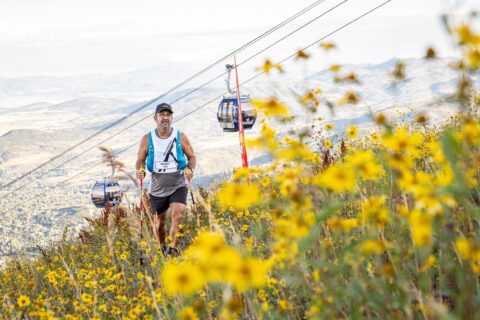
#EnduranceLessonsForLawyers #29029Everesting #PaulZani #EyalPeretz #GratefulToThe29029Team