American Investors Continue to Trust the Israeli Capital Market
This article was originally published on Funder in March 2026.
US entities commit to long-term investments in funds operating from Israel that invest, among other things, in Israeli companies.
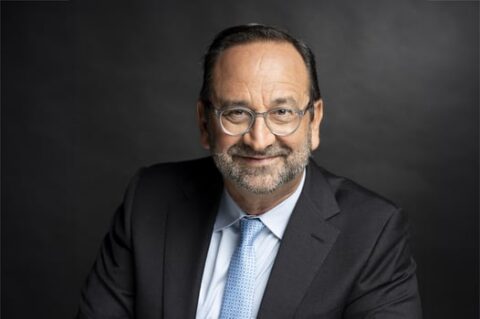
Adv. Michael Ehrenstein, Photo: Rami Zarnegar
The United States is one of the most important sources of capital in the world and one of the primary markets for Israeli companies. Local companies require capital and access to the US market, while simultaneously, investors and companies in the United States continue to seek out technology, expertise, and entrepreneurs in Israel in fields where Israeli companies have built an international reputation for themselves.
Swish Ventures is a venture capital fund founded by Omri Casspi and headquartered in Tel Aviv. The fund recently announced a $250 million fundraising round for its third fund. Following this round, its assets under management reached approximately $800 million. The fund plans to invest primarily in cybersecurity, artificial intelligence, defense, tech infrastructure, and government sector technology. Among the investors are Sequoia Capital, US pension funds, university endowment funds, and other institutional entities, alongside family offices.
Institutional entities such as pension funds and university endowment funds generally make decisions based on a long-term perspective. They evaluate risk, management, business potential, and expected return, and commit capital that is intended to work over years.
Hence lies the significance of the current fundraising. The willingness of large US entities to inject capital into a fund headquartered in Israel – which operates in the local tech market and also invests in Israeli companies – demonstrates that political and security tensions do not necessarily prevent long-term investors from committing to a fund operating out of Israel.
These investments have significance that extends beyond the individual transaction. A US institutional entity investing in a fund operating in Israel is also exposed to the success of the Israeli companies in its portfolio. A US corporation purchasing technology from an Israeli company may subsequently rely on development teams, know-how, and intellectual property located in Israel. As these ties multiply, a network of business interests is formed that is not solely dependent on intergovernmental relations.
Economic ties do not eliminate political disputes, nor are they immune to them. However, investments, R&D centers, intellectual property, and business partnerships are built over years, and therefore they may move at a different pace than the political arena. Government policy can change within months, whereas an investment in a venture capital fund is typically evaluated over a much longer period.
Since its inception, Swish has invested in approximately 20 companies, several of which have already reached a valuation of over one billion dollars. About half of its portfolio is based in Israel or maintains significant operations here, alongside investments in US companies. The fund’s activity focuses, among other areas, on fields where Israeli entrepreneurs and engineers have established an international reputation, including cyber, artificial intelligence, and tech infrastructure.
The fundraising by Swish does not single-handedly prove that tensions in US-Israel relations do not affect investments, nor can every dollar raised for the fund be viewed as a direct investment in the Israeli economy. It does, however, provide an example showing that large US entities are still willing to make long-term commitments to a fund headquartered in Israel and heavily active in the Israeli tech market.
Long-term investment decisions offer an additional perspective on the depth of economic ties between Israel and the United States. Despite security and political issues, American investors continue to see opportunities in companies, entrepreneurs, and funds connected to the Israeli tech industry.
Michael Ehrenstein, Esq. is a founding partner at the U.S. law firm Ehrenstein | Sager, specializing in commercial law, complex litigation, and high-stakes international arbitration.
Legal Disclaimer: This article does not constitute legal or tax advice. Its purpose is to raise awareness regarding U.S. compliance issues. Israeli businesses should consult with qualified U.S. legal and tax professionals to receive advice tailored to their specific operations.